

40 years of housing growth: why the best years often arrive when confidence is low
Last week I unpacked Cotality’s January 2026 market update and why the market cooling in December does not mean the opportunity has disappeared, it’s simply become more selective. If you missed it, you can read it here: Australia’s Housing Market Cools, Opportunity Heats Up!
This follow-up goes one level deeper. It uses Cotality’s 40-year view of national home value growth to answer a question I hear all the time: when the market feels uncertain, should I wait?
My view is simple. Waiting can be the right call if you don’t have a plan. But waiting indefinitely because the headlines feel loud is rarely a strategy.
This quarter, I’m watching one thing most closely: where demand is concentrating as affordability bites, because the next wave of growth locations usually shows up there first.
The top 15 calendar years for housing growth over the past 4 decades
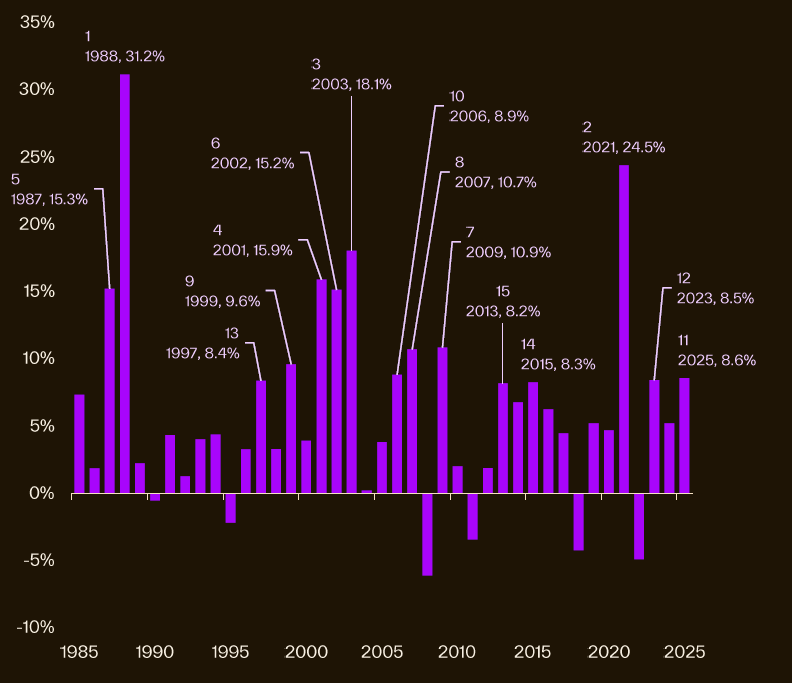
Calendar year change in the national Home Value Index. Source: Cotality January 2026.
“The strongest growth years don’t always line up with the most comfortable conditions.”
The 40-year lesson most people miss
When you look across four decades of data, one theme jumps out.
Australia’s housing market often does its best work when the narrative is the messiest. Some of the standout growth years occurred when interest rates were high, confidence was shaky, or the broader economy had bigger concerns than property prices. That doesn’t mean risk disappears, it means the drivers of growth are rarely as simple as one headline.
This is where investors get themselves into trouble. They wait for certainty, but certainty usually arrives after the market has already moved.
The standout years tell a bigger story than “rates up, prices down”
Cotality’s 40-year chart highlights a handful of calendar years that produced exceptional growth. The list includes years such as 1988 and 2021, along with several early-2000s peaks.
Calendar Year Change in National Home Value Index
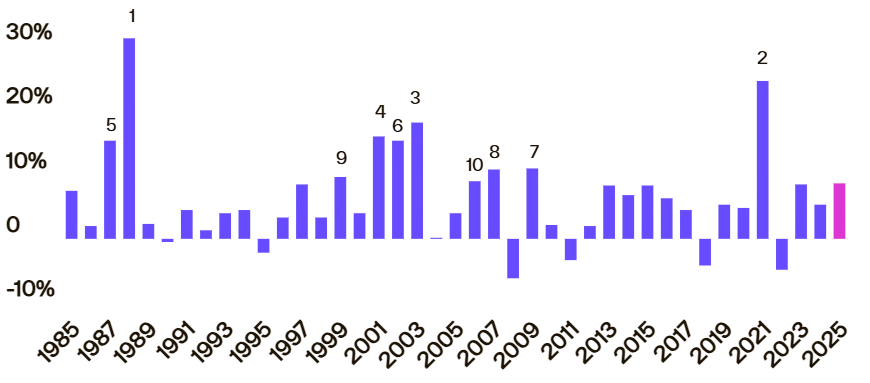
Calendar year change in the national Home Value Index. Source: Cotality January 2026.
The details matter less than the message: property value growth can surge even under conditions many people assume should hold it back.
That’s not an argument to throw caution out the window. It’s a reminder that if your entire strategy is built around predicting one variable, you’re likely to miss what’s really going on.
And here’s the bit that should give investors confidence. Over forty years, there were only a few down years. That long-term resilience is exactly why property remains such a powerful wealth-building asset when it’s approached properly.
Housing markets are driven by more than just interest rates
When you strip it back, big growth years usually have a few forces working together. Cotality’s commentary points to influences that sit alongside interest rates, including fiscal policy, credit availability, migration and economic shocks.
In plain English, this is what that looks like.
Fiscal settings can change behaviour quickly
When governments introduce incentives or stimulus, buyer activity can lift faster than most people expect. That demand does not spread evenly, it targets specific price points and locations.
Credit availability matters as much as the cost of money
The ability to borrow, not just the interest rate, influences who can transact and how far their budget stretches. When credit tightens, markets can slow even if rates are stable. When credit loosens or confidence returns, markets can lift even before the headlines catch up.
Migration and population growth reshape demand
When the population grows faster than the housing supply, pressure builds. It shows up first in rents, then in yields and finally in values, usually in locations with deep employment and limited stock.
Shocks create uncertainty, but they also create mispricing
In periods of economic disruption, buyer confidence can fall quickly. That’s where opportunities can appear for investors with strong buffers, disciplined criteria and a clear time horizon.
The key point is this. Markets move because people make decisions. Those decisions are influenced by affordability, confidence, supply and access to finance, not just the cash rate.
So, what does this mean for 2026?
If you’re reading the current market through the lens of the last 40 years, 2026 starts to look less scary and more familiar.
The market is shifting from broad momentum to more selective conditions. That typically means:
- Some locations and segments keep moving because fundamentals remain strong
- Some locations flatten because affordability and borrowing capacity cap demand
- The best opportunities become harder to spot from national averages
This ties directly back to the theme from the January update:
First, this is not one national market. It is a patchwork of mini-cycles running at different speeds.
Second, the best opportunities rarely sit where the crowd is looking. The crowd chases yesterday’s growth. Investors who build wealth tend to focus on tomorrow’s conditions: supply, affordability, local jobs, infrastructure and the buyer or renter pool.
That is exactly why a data-led approach matters more in a choppy, uneven year. It helps you separate emotion from the numbers and build conviction around a decision that needs to hold up for the next decade, not the next news cycle.
Rolling 28-day growth rate in the Daily Home Value Index – January 2026
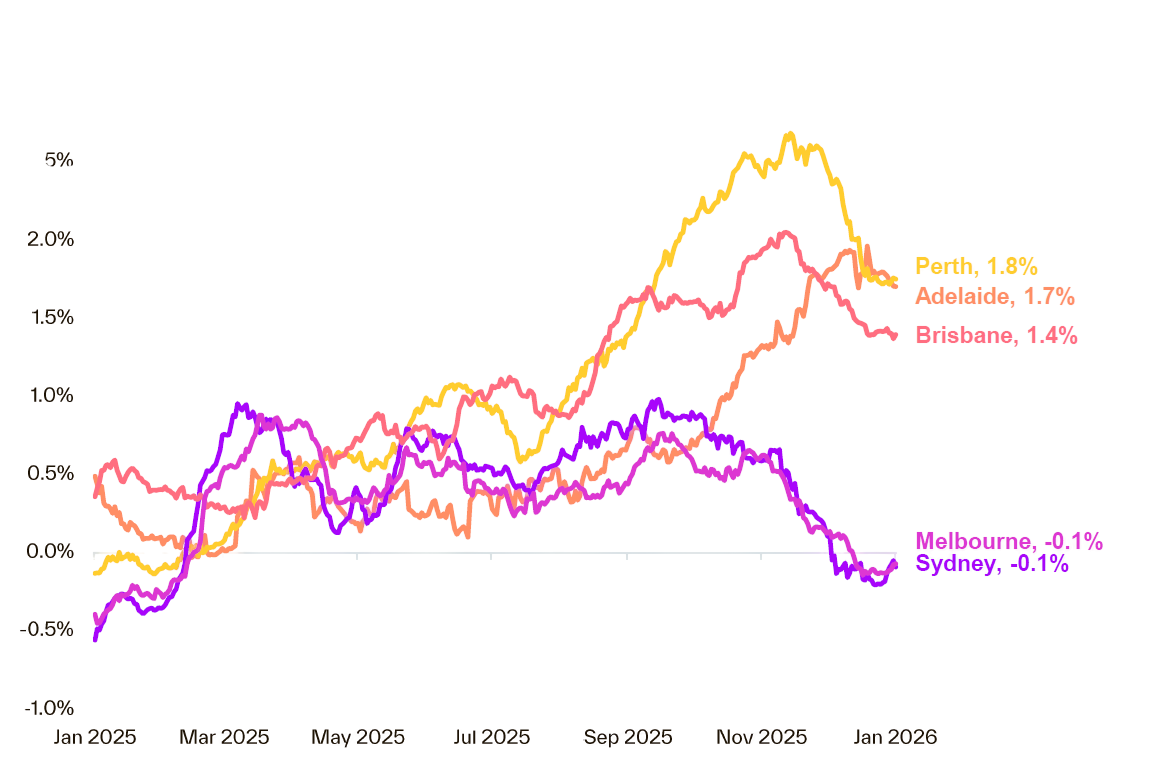
Momentum is easing, but it’s easing unevenly across cities. Source: Cotality January 2026.
Annual change in dwelling values by region
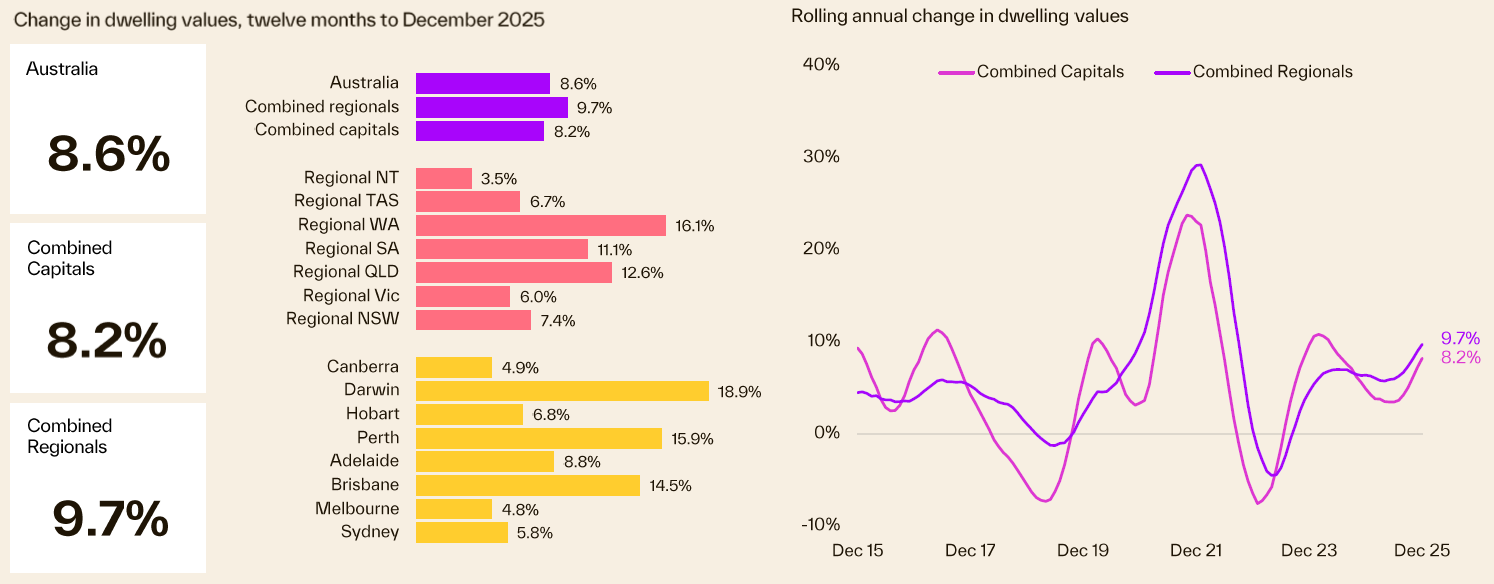
Dispersion is the opportunity: markets are moving at different speeds. Source: Cotality January 2026.
Why acting with a plan beats waiting for certainty
Property is a big step. It should never be rushed, but it shouldn’t be driven by fear either.
The investors who tend to do well over time are not the ones who perfectly time the bottom. They are the ones who:
- Buy quality assets with a clear purpose
- Use finance buffers so they can hold through volatility
- Focus on fundamentals rather than commentary
- Review and refine, rather than react and restart every time the market changes tone
Waiting can feel safe, but it can quietly become expensive if prices and rents continue moving while you’re still searching for the perfect moment.
A practical strategy checklist before you take your next step
If this article is your prompt to act, here’s the checklist I use to keep decisions grounded.
1. Clarify the goal
Are you buying for capital growth, income, balance, or a long-term portfolio plan that evolves over time?
2. Set the time horizon
If you’re not prepared to hold through a full cycle, you’re likely to feel every headline twice as loudly.
3. Define your buying criteria before you look at listings
Target price range, dwelling type, land component where relevant, scarcity, owner-occupier appeal, rental depth and vacancy risk.
4. Match the strategy to the finance structure
Buffers, borrowing capacity, risk settings and cash flow should support the plan, not fight it.
5. Research at the suburb and pocket level
This is where the mini-cycle becomes apparent. The right suburb in a soft city can outperform the wrong suburb in a booming one.
6. Pressure test the downside
What happens if rates are higher for longer? What happens if the rental vacancy rate lifts? What happens if values flatten for a year or two? If the plan still works, you can move with confidence.
Quarterly Change – lower quartile versus upper quartile growth
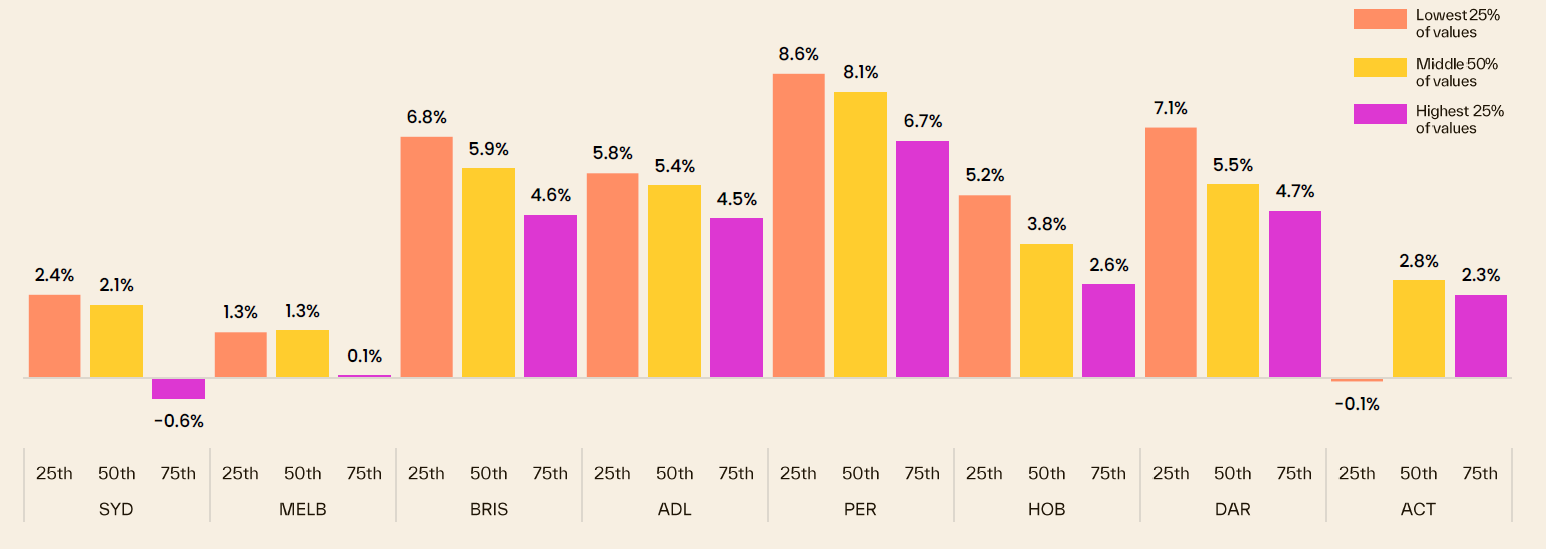
Demand is concentrating where affordability still works. Source: Cotality January 2026.
The common traps I see when investors follow headlines
If you want a quick way to improve outcomes, avoid these three mistakes:
- Chasing last year’s strongest market without understanding supply, affordability and where you are in that local cycle
- Falling in love with a story and ignoring the numbers, particularly cash flow, ongoing costs and resale demand
- Trying to pick the perfect time instead of building a plan that works across a range of scenarios
Investing is not about being right every month. It’s about stacking decisions that make sense over the years.
Closing thoughts
The 40-year view is a steadying perspective. It reminds us that the market often rewards preparation, not prediction and that strong outcomes can emerge under conditions that feel uncomfortable in the moment.
If you’re planning a move in 2026, use the data as your anchor. Sense-check assumptions, tighten your buying criteria and ensure your finance settings and buffers align with your time horizon.
If you’d rather not navigate the noise alone, working with professionals who work in the data every day and understand on-the-ground market dynamics can help you avoid expensive mistakes, identify the right locations and segments for your strategy and move with confidence when the right opportunity appears.
If you’d like to revisit last week’s national update before you plan your next step, it’s here: January 2026 Australia Property Investment Insights
References and data sources
Cotality Monthly Housing Chart Pack, January 2026.
Disclaimer
This update is general information only and does not take into account your personal circumstances. Property and finance decisions are significant and should be based on your objectives, cash flow, risk profile and advice from appropriately licensed professionals.