

Each month, the Reserve Bank of Australia (RBA) provides a detailed chart pack to summarise the macroeconomic and financial market trends affecting the Australian economy and property markets. This blog post will discuss the key takeaways from the May RBA report, focusing on the world economy, Australia’s economy, inflation, interest rates, the household sector and more.
You can download the latest full chart pack from the RBA website – CLICK HERE TO DOWNLOAD
The World Economy
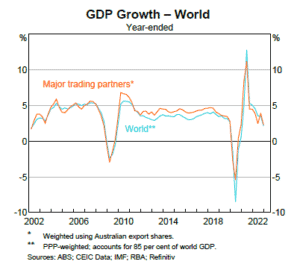
Australia’s economy is heavily influenced by the performance of its major trading partners. While the global economy continues to recover from the COVID-19 pandemic, some countries may still face recession in 2023. The resilience of the United States and China has driven the global economic recovery, with both countries demonstrating strong growth. Our trade relationships with China are improving, which is positive for Australia’s economy.
Inflation
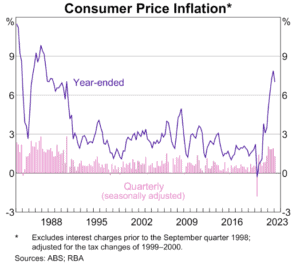
Inflation has emerged as a worldwide concern due to supply chain disruptions, heightened consumer spending, and escalating energy prices. Central banks now face the challenge of managing inflation while promoting economic growth and employment. Fortunately, global inflation seems to have peaked, which should help the Reserve Bank of Australia (RBA) control inflation domestically. While inflation has likely reached its zenith, the RBA is concerned about the slow pace at which it is declining, which led to the bank implementing its 11th interest rate increase in a year at the beginning of the month.
Australian Economy: Demonstrating Resilience Amidst Global Challenges
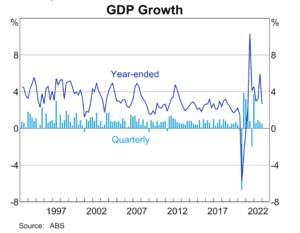
Despite facing significant global economic challenges, the Australian economy has consistently displayed impressive resilience. The COVID-19 pandemic led to economic downturns across the globe, but Australia managed to withstand these turbulent times while maintaining financial stability.
The Australian economy is currently experiencing strong growth, driven by robust domestic consumption and low unemployment rates. The trade sector also exhibits vigour, with significant iron ore exports and other minerals. The high global demand and elevated commodity prices have resulted in a trade surplus, further consolidating Australia’s economic standing.
Nevertheless, obstacles remain. The tourism and education sectors, traditionally crucial contributors to the Australian economy, are still grappling with the consequences of international travel restrictions. Although domestic tourism has witnessed a revival, the absence of international tourists and international students has had a significant impact. Encouragingly, there is now an influx of international students and migrants returning to the country.
Moreover, Australia’s trade relationships, especially with China, have grown increasingly complicated. The geopolitical environment affects trade dynamics, necessitating careful management to safeguard Australia’s long-term economic interests.
Interest Rates
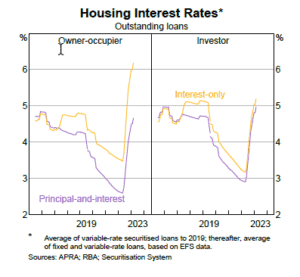
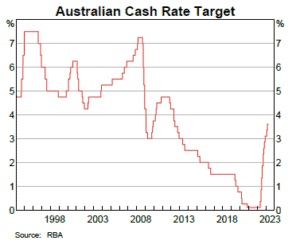
Interest rates set by the RBA respond to changes in inflation. The latest RBA decision for a 25 basis point increase takes the cash rate to 3.85%. This rate-tightening cycle has been the most significant and most rapid on record. The RBA’s decision to raise rates was influenced by a more positive trend in housing conditions and an uplift in consumer attitudes, which could prolong higher inflation levels. Although the RBA has raised interest rates 11 times in the past year, the full impact has yet to be felt. The RBA’s pause on interest rate hikes in April temporarily boosted consumer confidence and increased interest in property, but the subsequent rate hike in May has dampened enthusiasm.
Household Sector
Aussie households have faced declining disposable income due to rising costs, yet they continue to spend on discretionary items, such as clothing, restaurants, and lifestyle experiences. The savings ratio has dropped to pre-pandemic levels as Australians continue to spend their savings to maintain their lifestyles.
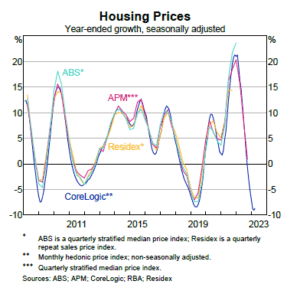
Consumer confidence is historically low, influenced by negative news about inflation, falling house prices, and rising interest rates.
Labour Markets
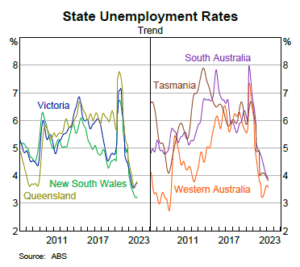
Australia’s labour market remains resilient despite rising interest rates and global challenges. Unemployment and underemployment rates have steadily declined, returning to pre-pandemic levels. However, recovery across sectors has been uneven, with mining and construction showing strong growth, while tourism and higher education continue to face challenges due to ongoing international travel restrictions.
The Future of the Australian Economy and Property Markets
While challenges persist, the Australian economy remains strong, with significant equity in homes and high net wealth positions. The recent downturn in the property market is expected to reset and give way to a new property cycle when inflation stabilises and interest rates cease to rise.
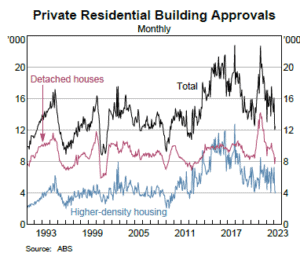
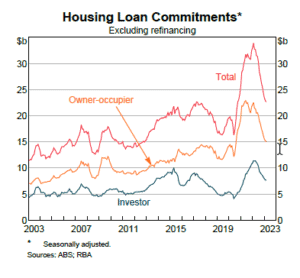
The housing supply shortage continues to be a concern, with no immediate solution in sight. Despite falling housing loan commitments, they remain above long-term averages.
Conclusion
The Australian economy is navigating global challenges and interest rate rises with resilience. The RBA’s careful management of inflation, alongside the ongoing recovery of critical economic sectors, should help Australia maintain stability and growth in the coming months and years. The strong labour market, robust domestic consumption, and favourable trade relationships contribute to this resilience, despite the challenges faced by the tourism and higher education sectors. As Australia moves forward, adapting and overcoming these challenges will be crucial to ensure continued economic growth and prosperity.
Always review any property investment strategy, location research, and investment analysis data with a professional, QPIA (PIPA Member) qualified & accredited ASPIRE Property Advisor Network Advisor. Never rely on glossy sales brochures or property marketing information, ensuring a property is right for your strategy. Property Investing is about BUYING a property that matches your goals and aligns with your investment strategy. Never be SOLD an investment, know your numbers!
Visit www.aspirenetwork.com.au or call our office to be connected with an accredited and independent Property Investment Advisor on 1300 710 933.