

Housing Market Rebound in February – What It Means for Investors
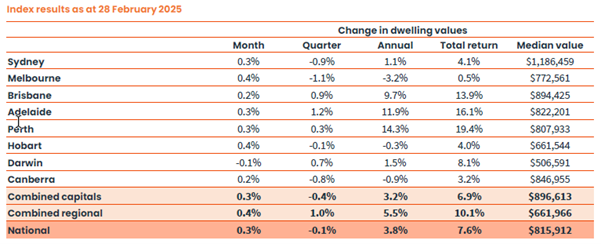
The latest CoreLogic Home Value Index (HVI) shows a turning point in the Australian property market. February marked the end of a brief three-month downturn. Housing values rose by 0.3% nationally, and while this growth may seem modest, the widespread nature of the increase makes it significant.
This data is crucial for property investors because it signals renewed market momentum. The shift in sentiment, coupled with persistent supply shortages, creates new opportunities for capital growth and rental returns. The key is understanding which markets are strengthening, where value still exists, and how these trends might shape investment decisions for the months ahead.
Let’s break down the key insights and what they mean for investors.
Key Takeaways for Investors
- The Recovery is Broad-Based but Uneven – Spotting Market Rebounds Early
In any property cycle, different markets recover at different speeds. While some cities continue to cool, others show early signs of recovery. Identifying these shifts early is key for investors who want to enter markets before competition intensifies.
- February’s 3% increase in national housing values suggests a reversal in sentiment, with Melbourne and Hobart leading the recovery (+0.4%) after months of declines.
- Premium properties drive Sydney and Melbourne’s recovery, as higher-end markets are the first to respond to changing economic conditions.
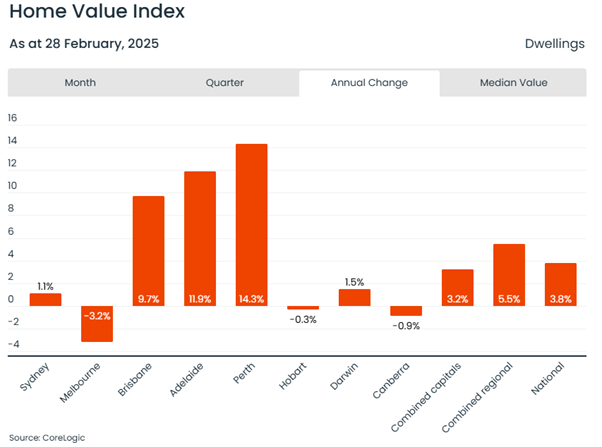
- The once red-hot Brisbane, Adelaide, and Perth markets are slowing, with more modest growth of 0.2% to 0.3%, signalling a shift in where the best investment opportunities might lie.
For investors, this means paying attention to markets recovering, where capital growth potential is highest before prices rise too far.
Source CoreLogic
- Regional Markets Continue to Outperform – Stability in Growth and Yields
One of the biggest trends in recent years has been the strength of regional property markets. As affordability pressures mount in capital cities, many buyers and renters are looking further afield, sustaining demand in these areas.
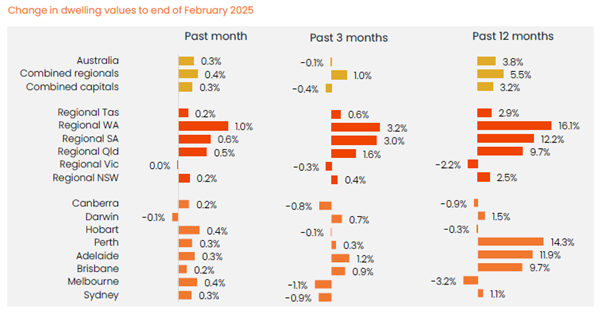
- Regional housing values rose by 0.4% in February, slightly outpacing capital city growth.
- Over the past quarter, regional areas grew by 1.0%, while combined capital cities saw a 0.4% decline.
- Investors looking for strong rental returns will find that regional properties offer higher rental yields than metro areas.
With continued population shifts, work-from-home flexibility, and lifestyle-driven migration, regional markets remain a solid choice for investors seeking long-term rental stability and capital growth.
- Supply Constraints Are Keeping Prices Up – Less Stock, More Competition
One of the biggest drivers of property prices is supply, or the lack of it. When fewer properties are available for sale, buyer competition increases, supporting price growth even in uncertain conditions.
- New listings are down 4.7% year-on-year, meaning fewer properties are hitting the market.
- Total advertised supply levels are still 7.9% below the five-year average, further tightening conditions.
- With buyers becoming more active, particularly in markets expecting interest rate relief, demand is starting to outstrip supply again, putting upward pressure on prices.
For investors, lower listing volumes mean that well-located properties will likely hold their value and appreciate as competition builds. Those waiting for a significant price drop may be left on the sidelines as stock remains tight.
- Market Sentiment is Improving – Confidence is Returning
Economic fundamentals do not just drive property markets; sentiment plays a huge role. When buyers expect prices to fall, they delay purchases. When they believe the worst is over, they re-enter the market. Right now, confidence is returning.
- Expectations of interest rate cuts later this year are driving renewed interest from buyers.
- Auction clearance rates have returned to long-term averages, indicating demand is returning.
- Premium markets, which were hit hardest by rate hikes, are now leading the recovery, a typical sign that the market is shifting into a growth phase.
Sentiment shifts are critical to timing the market for investors. When confidence improves, buyer demand rises, leading to increased competition. Now is the time to secure investment properties before momentum fully returns.
- Rental Growth is Slowing but Still Above Long-Term Averages – Strong Yields Remain
While rental prices aren’t climbing as rapidly as in 2022-2023, they remain well above historical trends. This is good news for investors focused on cash flow.
- Nationally, rents rose by 0.6% in February, the most substantial increase since May 2024.
- Annual rental growth has slowed to 1%, but this is still double the pre-pandemic average of 2%.
- Gross rental yields have climbed to 72% nationally, making property a more attractive income-generating asset.
For investors, this means rental income remains strong, particularly in cities like Adelaide (5.1%), Perth (6.4%), and Hobart (4.5%), where yields are highest. Even as rental growth moderates, demand remains high, ensuring stable and reliable cash flow for investors.
Opportunities for Property Investors in 2025
The CoreLogic data confirms a critical shift in market dynamics, presenting key opportunities for investors:
- Look at recovering markets: Melbourne and Hobart offer value, while Sydney’s premium market rebound suggests a broader uplift is on the horizon.
- Regional markets remain strong: If rental returns and steady growth are priorities, regional Queensland, South Australia, and WA remain attractive.
- Supply shortages will push prices up: Investors holding property in high-demand areas are positioned to benefit from capital appreciation in the coming months.
- Rental yields remain attractive: The rental market remains stronger than historical averages, ensuring positive cash flow for investors in high-yielding locations.
- Interest rate cuts could fuel demand: If rates ease in late 2025, expect buyer competition to intensify; getting in before this happens could mean better deals.
Final Thoughts
The property market is shifting again, and savvy investors recognise these early signs of change. While growth remains moderate, the key takeaway is that the downturn has likely bottomed out, and momentum is building across various markets.
With supply tight, sentiment improving, and rental demand remaining high, 2025 presents opportunities for capital growth and strong rental yields. Investors who act strategically now, before the market fully rebounds, will be well-positioned for the cycle’s next phase.
If you’d like to explore how this data aligns with your property investment strategy, let’s have a conversation. Now is the time to position yourself for long-term success in Australia’s evolving property landscape.